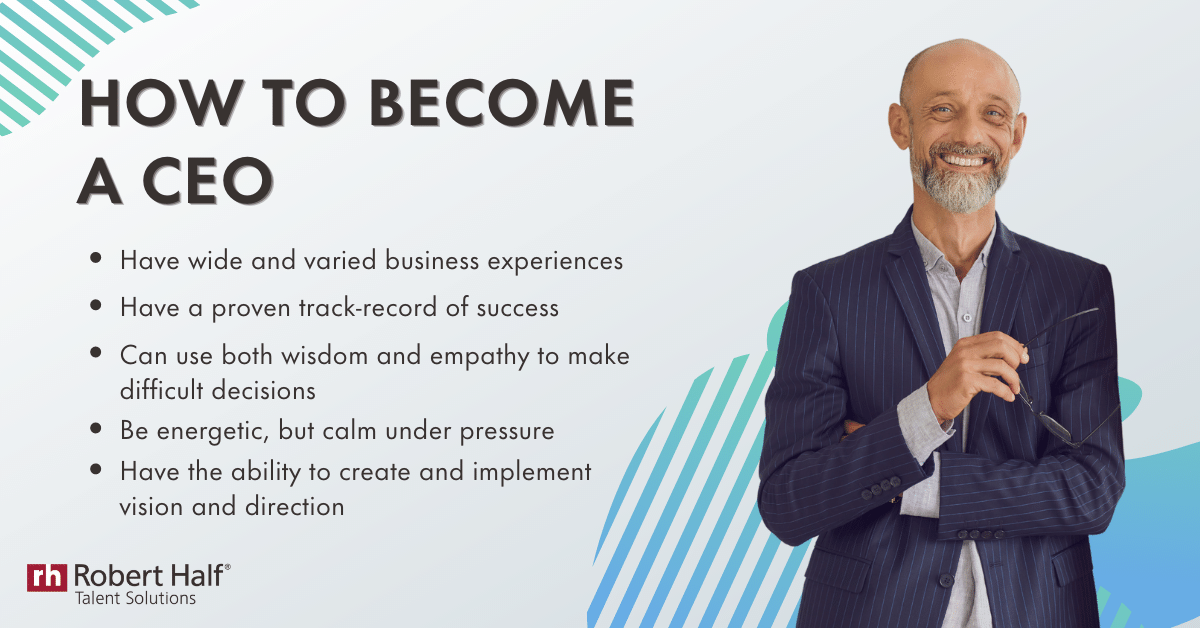
Becoming a great chief executive officer (CEO) in the UK is one of the ultimate goals in business and career progression. Many ambitious professionals want to know how to be a CEO since they are the highest ranking of all directors, the individuals who take charge of the executive team and have greatest power and influence in the boardroom. The role of the CEO differs from organisation to organisation, according to the unique demands of each business and the structure at board level. Yet typically, tasks include creating and implementing the vision, mission, and overall direction of the business, whilst directing and evaluating the work of other executives. CEOs are also responsible for formulating the strategic plan, representing the organisation in business and the media, and getting everyone pulling in the same direction.
What does the typical CEO look like?
Anyone with the requisite skills and experience has the opportunity to become a great chief executive, although it appears some candidates may have an advantage over others. Latest research from our UK FTSE 100 CEO Tracker has revealed a series of trends relating to career direction, age, gender, education, nationality and professional background. There has been an increasing trend for CEOs to be promoted from within the organisation, showing the importance of knowledge and exposure to the specific industry.
While education can be a fundamental stepping stone to reaching the top job, it is becoming less prevalent than in previous years. Of current top level executives, a quarter have an MBA, while a very small handful have PhDs. When looking at the average characteristics of these company leaders, these CEOs are typically aged 55 and above. They're typically male with a significant tenure.
While the profile of a FTSE 100 CEO may not represent all executive-level appointments, these individuals characterise the best of the best.