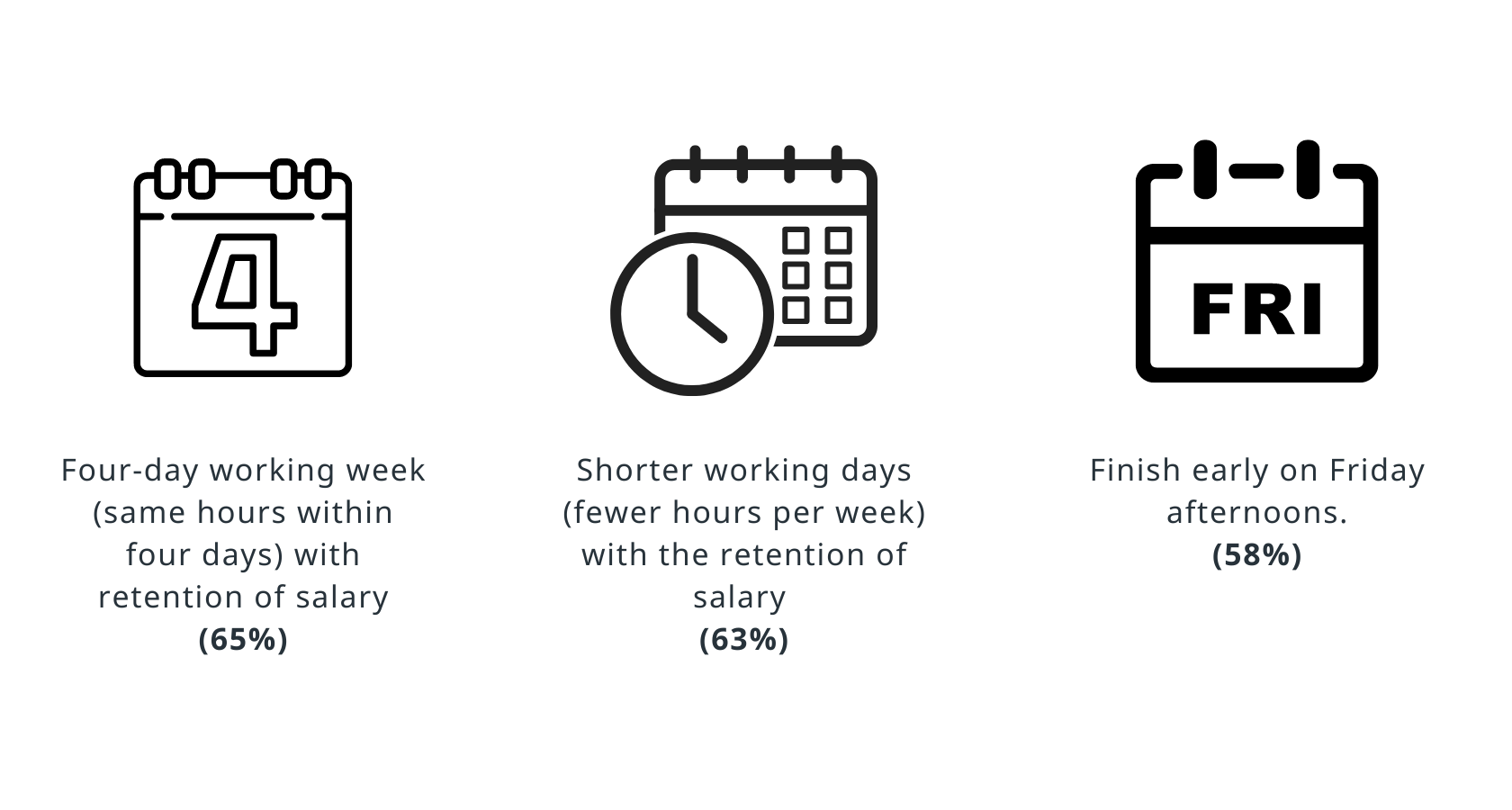
65% of Australian workers want a four-day working week with retention of salary, followed by 63% who desire shorter working days with the retention of salary and 58% who would like a contracted early finish on Friday afternoons to be introduced by their employer in 2024.
With 69%, Gen Z and Gen X employees are the most eager for a four-day work week to be implemented at their organisation.
93% of Australian employers plan to implement new flexible benefits for their staff this year.
Four-day work week at the top of the list for all generations
All generations in the current workforce agree they would like a four-day work week to be implemented by their employers. While Gen Z (69%) and Gen X (69%) are most keen to be able to work the same number of hours in four days instead of five days with retention of salary, this is closely followed by Millennials (63%) and Baby Boomers (57%).
“The appeal of a four-day workweek is undeniable. While increased productivity, a loyal workforce and having an advantage in the job market are known to be key advantages for companies, implementing this business model proves to be a challenge for most due to logistics, the nature of the operations and industry, and the potential to generate less output. So far, the four-day workweek remains a fascinating experiment, one that holds promise but demands careful consideration,” says Nicole Gorton, Director at Robert Half.
“All generations value flexibility. But Gen Z, having begun their career during the work-from-home and flexibility revolution initiated by the pandemic, have particular high expectations. Their desire and advocacy for more flexibility could help transform the world of work, ultimately benefiting other generations who also seek flexibility.”
Employees and employers don’t see eye to eye on what benefits for this year
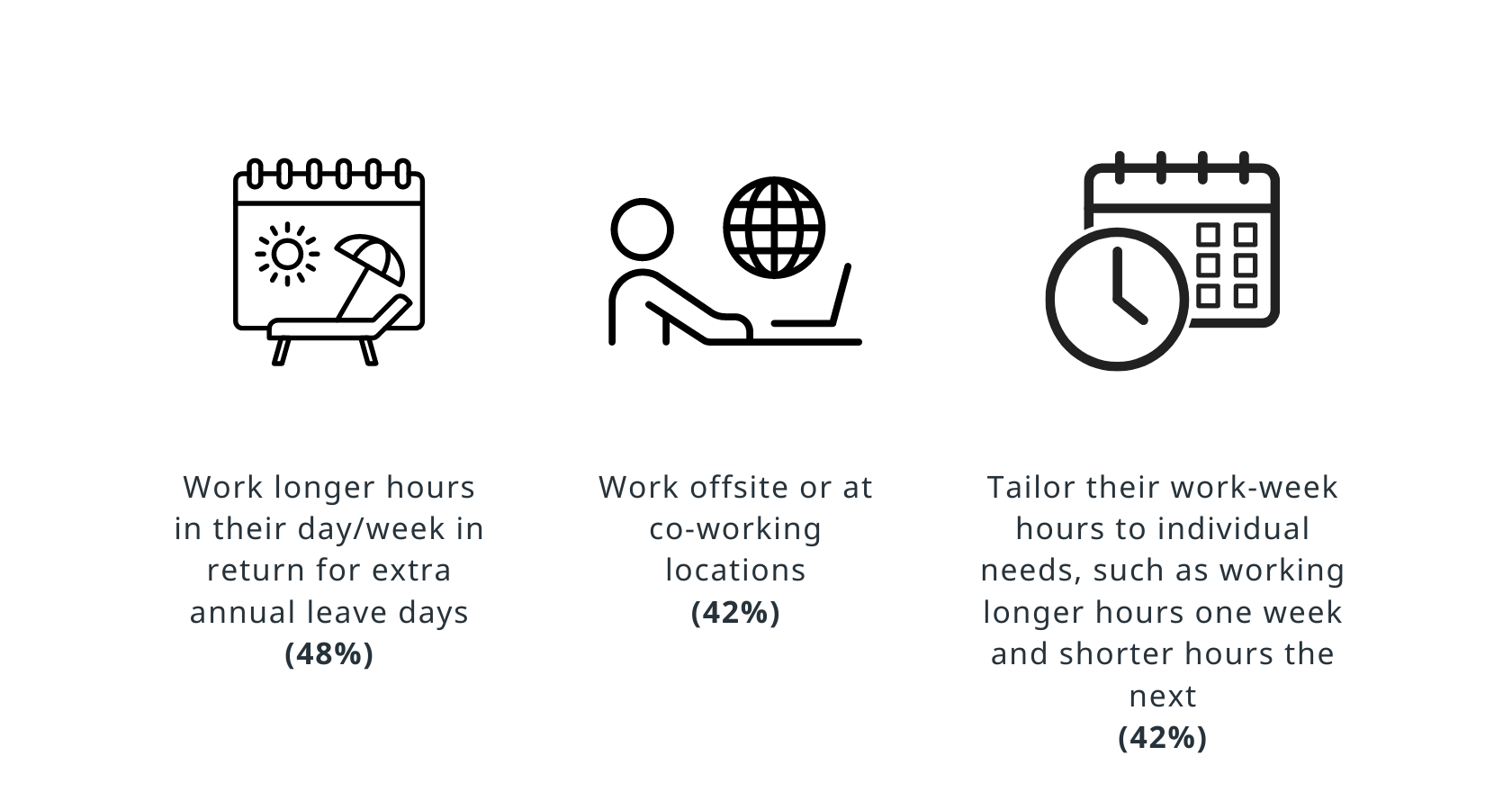
Nine in ten (93%) Australian employers plan to implement new flexible benefits for their staff this year. However, with employees aiming for flexible benefits that challenge the traditional Monday to Friday, 9am-5pm model, the top three flexibility benefits employers plan to introduce in 2024 are the following instead:
“Even with the remote working revolution slowly coming to an end, employers are not averse to granting their employees extra flexibility, with many reverting to a variety of flexible benefit options.
"Flexibility, in its many shapes and sizes, remains a top demand for employees of all generations. Companies must adapt to this new reality to stay an attractive employer, even if it deviates from traditional workplace norms. The perks and benefits world has changed and ignoring this shift can lead to losing businesses valuable talent or struggling to attract new hires. Fortunately, flexibility isn't just about working from home; there are many flexible benefits on offer today,” concludes Gorton.