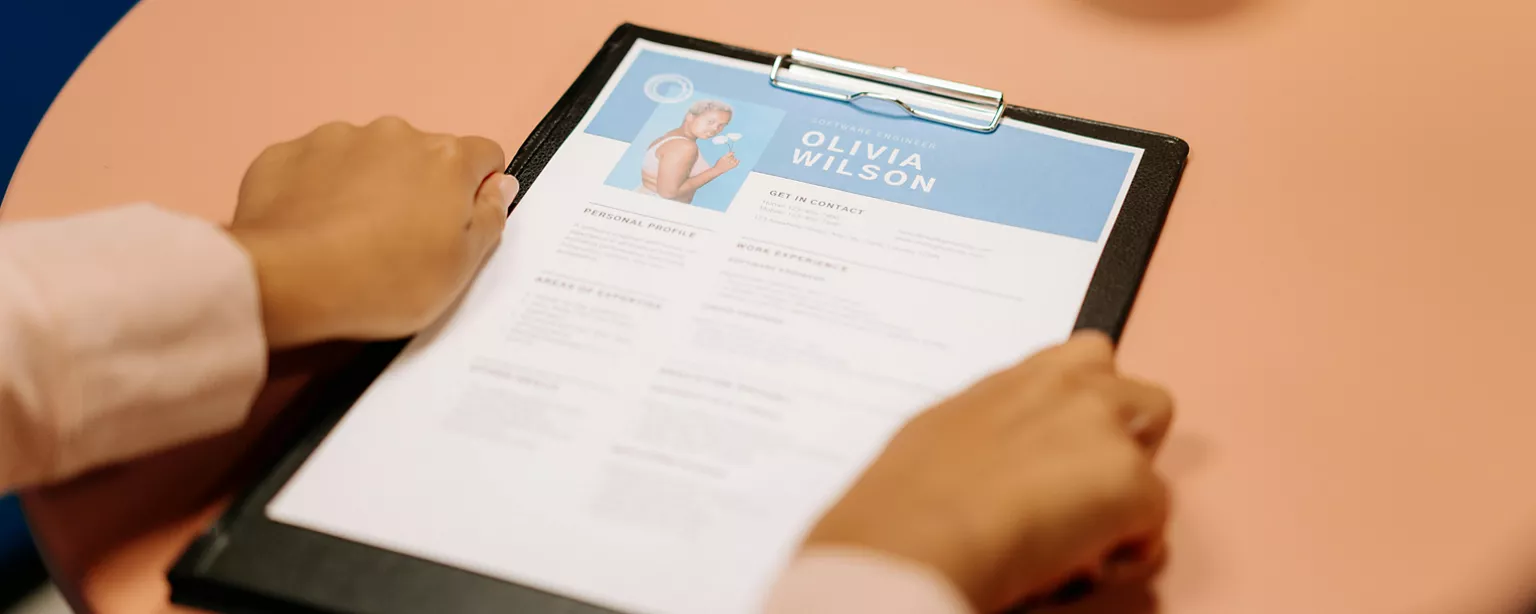
A strong cover letter is valuable, but your resume determines the first impression when you apply for a job. Yet many candidates -often unintentionally- make mistakes that immediately reduce their chances of getting an interview.
Curious what those mistakes are? Robert Half shares 10 things recruiters prefer not to see on resumes or in cover letters.
1. Sloppy formatting
Multiple fonts, Word files, overly creative layouts, or an unprofessional email address. All of these make your resume look messy and unprofessional.
A clean, consistent design always works better. Make it easy on yourself. Download our free resume template and instantly ensure a professional-looking resume.
2. Only job duties, no achievements
Recruiters want to know what you accomplished, not just what your responsibilities were. Provide enough detail about your tasks, and don’t forget to highlight completed projects clearly.
So instead of writing “payment control” under skills or job description, talk about “an optimization that reduced late payments by 50%.” This immediately shows the recruiter what experience you have.
3. Outdated or irrelevant experience
Listing every job you’ve ever had makes your resume unnecessarily long. Focus on roles that align with the position and the skills needed today.
Are you a recent graduate and lacking experience? Then it’s different, of course. Mention what is somewhat relevant and what you learned from it. As a youth camp leader, you undoubtedly learned leadership, teamwork, and creativity. So mention that if you're applying for a job where leadership qualities are relevant.
4. Gaps in your timeline without explanation
Being out of the workforce for six months or more isn’t a problem. What matters is how you explain it. Maybe you were traveling or caring for a sick family member.
Whatever the reason, be honest! It creates trust. Feel free to mention in your cover email that you’re happy to explain why you took a sabbatical year.
5. A cover email that is too long
Your cover email should be short and concise. Professionally state which position you’re applying for and highlight only your strongest and most relevant qualities.
Keep your explanation limited to what matters. All other relevant information is already in your resume.
6. A long software list you don’t actually master
If you claim “excellent knowledge of Word, Excel, and PowerPoint,” you should be able to do more than type a document, create a simple calculation, or duplicate a slide. Otherwise, list it as “basic knowledge.”
Do you build pivot tables, create data models, and work with VLOOKUPs? Then you may call yourself an Excel expert, as long as you can confidently demonstrate this in an interview.
Be honest and confident, but avoid promising skills you can’t deliver. If you’re caught quickly, the recruiter will wonder what else you exaggerated.
7. Inconsistency between your resume and LinkedIn profile
Applying for a job used to be simpler. Usually updating your resume was enough. Today, your LinkedIn profile is just as important. Make sure the two don’t contradict each other.
You don’t need to copy everything word-for-word, but ensure consistency in dates, job descriptions, and skills.
8. Spelling errors and long sentences
When writing your resume or cover letter, it’s crucial that the right information stands out. Avoid overly long sentences or large blocks of text.
Write short, active sentences and keep only essential words. Use bullet points where possible. This helps the recruiter quickly find key information.
Recruiters usually review dozens of resumes on a daily base, so make their job easier. Also never underestimate the impact of a spelling error. Typos signal carelessness, which is not a good look. Have someone proofread your documents, or ask an AI-assistant like ChatGPT or Co-Pilot to help.
9. Buzzwords and clichés without substance
Calling yourself a “team player” or “creative” no longer impresses recruiters. These terms are so overused that they reveal nothing about who you really are.
Don’t say “I’m a strong writer”; but rephrase it as “I wrote two articles per week that averaged 1,000 readers.” The more concrete your profile is, the stronger your impression.
10. Incorrect contact information
“Do people really list a wrong phone number or send an outdated LinkedIn profile?” Absolutely!
It takes one minute to check whether the information on your resume and cover letter is correct. So take your time. It could save your chances of getting an interview.
Download our cv template for free and increase your chances of a job interview
Upload your resume here
The curriculum vitae or cv determines the first impression a potential employer has of you. Be sure to pay enough attention to the content and the format of it.
Download our cv template for free and increase your chances of a job interview.
Download the example as a Word file
Enter your details
Export as a PDF
Mail your brand new resume along with your motivation letter to companies
Don't hesitate to send in your resume to Robert Half, we are happy to help you with your job search
Print it and take it with you to your first interview