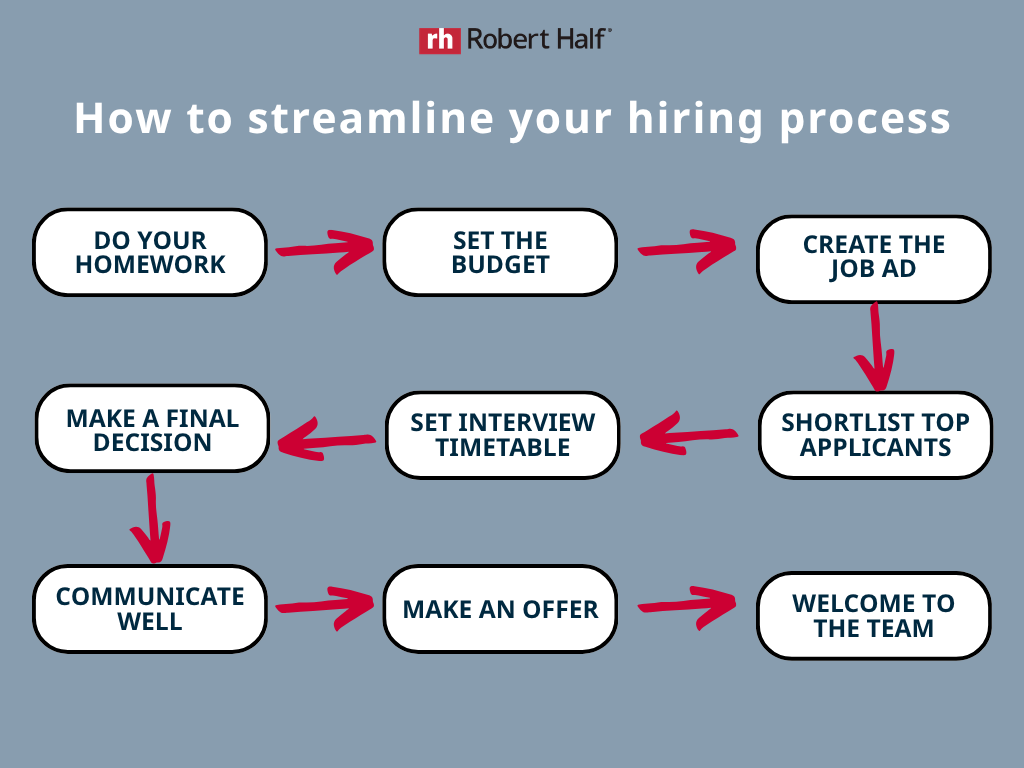
Problem: Most hiring managers know what they're looking for in a candidate, but few have a structured process to find them consistently, and the gaps show up in slow decisions and missed talent.
Solution: A good recruitment process gives you a repeatable framework, from writing the job description through to making the offer, so every hire is faster and better informed by the right data and questions.
Result: Better hires, shorter vacancies, and a recruitment approach you can rely on every time a role opens up.
Tips for a streamlined recruitment process:
The recruitment process is a complex journey for any hiring manager who is searching for their next top employee. Each step can be a delicate process without an adequate amount of preparation done prior or understanding the valued importance of each step.
How to have an effective recruitment process
If you’re finding it challenging to hire top employees, there may be several contributing factors affecting this outcome. For example you may be taking too long, and jobseekers do not wait around during a slow hiring process. Or you may not have asked the right job interview questions to uncover a candidate’s suitability for the job.
If you feel that your recruitment process could be improved, have a look at our practical tips for being better prepared, along with methods to streamline and enhance your ability to find the right employee. Alternatively, contact us for help recruiting the ideal candidate for your team.
How to create a job description template
Learn more
Are you currently recruiting for a new staff member and wondering where to begin? Do you know whether you’re planning to recruit a contract, temporary or permanent hire? To make the recruitment process as efficient as possible, you need to make sure your job description is as effective as possible.
How to effectively promote job advertisements
Learn more
Even the most compelling job advertisement can fail to attract the interest of top candidates if it isn’t widely promoted. A strong promotion strategy ensures your job ad is seen by the greatest number of candidates, while also standing out from similar roles being advertised by other companies.
How to conduct a CV review
Learn more
If you're the hiring manager who has to whittle down that big pile of CVs, it's a task that can quickly become overwhelming and create delays during the recruitment process. So, how can you review resumes more efficiently and hasten up the process, without running the risk of missing or disqualifying star candidates?
Employer interview questions
Learn more
While it’s expected that candidates will prepare well for an upcoming job interview, the exact same can be said for hiring managers. Developing a good selection of interview questions for employers is a key part of the recruitment process, helping to tease out key details about a candidate’s strengths, weaknesses and personality.
Employer interview techniques
Learn more
The job interview is a chance to connect the dots and determine whether a candidate is really qualified for a job. It’s not always an easy meeting to navigate, but adopting best practice employer interview techniques can make a significant difference towards your outcome.
Planning and conducting a job interview
Learn more
As a hiring manager, it's easy to feel that there aren't enough hours in the day to meet every candidate who submitted a great resume. Conducting an effective job interview process however is key to securing the best talent, whether it’s meeting the jobseeker in-person or on a video call.
Shortlisting the best candidates
Learn more
After you have completed all interviews, you'll have to make the tough decision of eliminating candidates in order to produce a final shortlist. This will mean assessing candidates based on competencies, cultural fit and aptitude, plus making the time to conduct reference checks of your final selection.
Conducting reference checks
Learn more
A reference check forms a key part of the hiring process, providing independent insights into a candidate’s past work performance and cultural fit. There are plenty of candidates who can look outstanding on paper and come across brilliantly during an interview, so it’s important to follow-up interviews with a reference check.
Making your final hiring decision
Learn more
Once you've finished interviewing jobseekers and made a shortlist of the best candidates, it's time to make a final hiring decision. This calls for being objective when evaluating top contenders, checking that you’re fulfilling your hiring criteria and ensuring that all internal stakeholders are in agreement.
Making the right job offer
Learn more
You're satisfied that you've selected the right candidate, and now it's time to make it official with a job offer. Before you reach out to the candidate, there are some things you'll want to have checked off your list so that the recruitment process goes as smoothly as possible.
New hire onboarding process
Learn more
As a hiring manager, you should strive to set up new employees for success from day one. The importance of effectively introducing and onboarding new employees into your organisation cannot be underestimated. Make sure you have an onboarding plan in place and make the time to properly introduce your new team member to the organisation.
Frequently Asked Questions (FAQs)
What are the key stages of an effective recruitment process in Hong Kong?
A strong recruitment process covers six core stages: writing a clear job description, promoting the role effectively, reviewing applications, conducting structured interviews, checking references, and making a well-considered offer. Skipping or rushing any stage increases the risk of a poor hire.
How long does the average hiring process take in Hong Kong?
Most hiring managers aim to fill a role within four to six weeks. Delays typically happen at the CV review or interview scheduling stage. Keeping stakeholders aligned and moving candidates through quickly reduces the risk of losing them to a competing offer.
What are the costs of a slow recruitment process?
A drawn-out hiring process costs more than time. Productivity drops when roles stay vacant, existing staff take on extra workload, and top candidates accept other offers. The longer a position remains open, the more expensive it becomes to fill.
Why are reference checks still crucial if a candidate interviews well?
Interviews show you how a candidate presents themselves. Reference checks show you how they actually perform. A quick conversation with a former manager can surface strengths, development areas, and cultural fit that no interview alone will reveal.
How can Hong Kong employers optimise their job descriptions to attract top talent?
Be specific about the role, the team, and what success looks like in the first 90 days. Avoid vague language and long lists of requirements. Candidates respond to descriptions that are focused and honest about what the job actually involves day to day.